
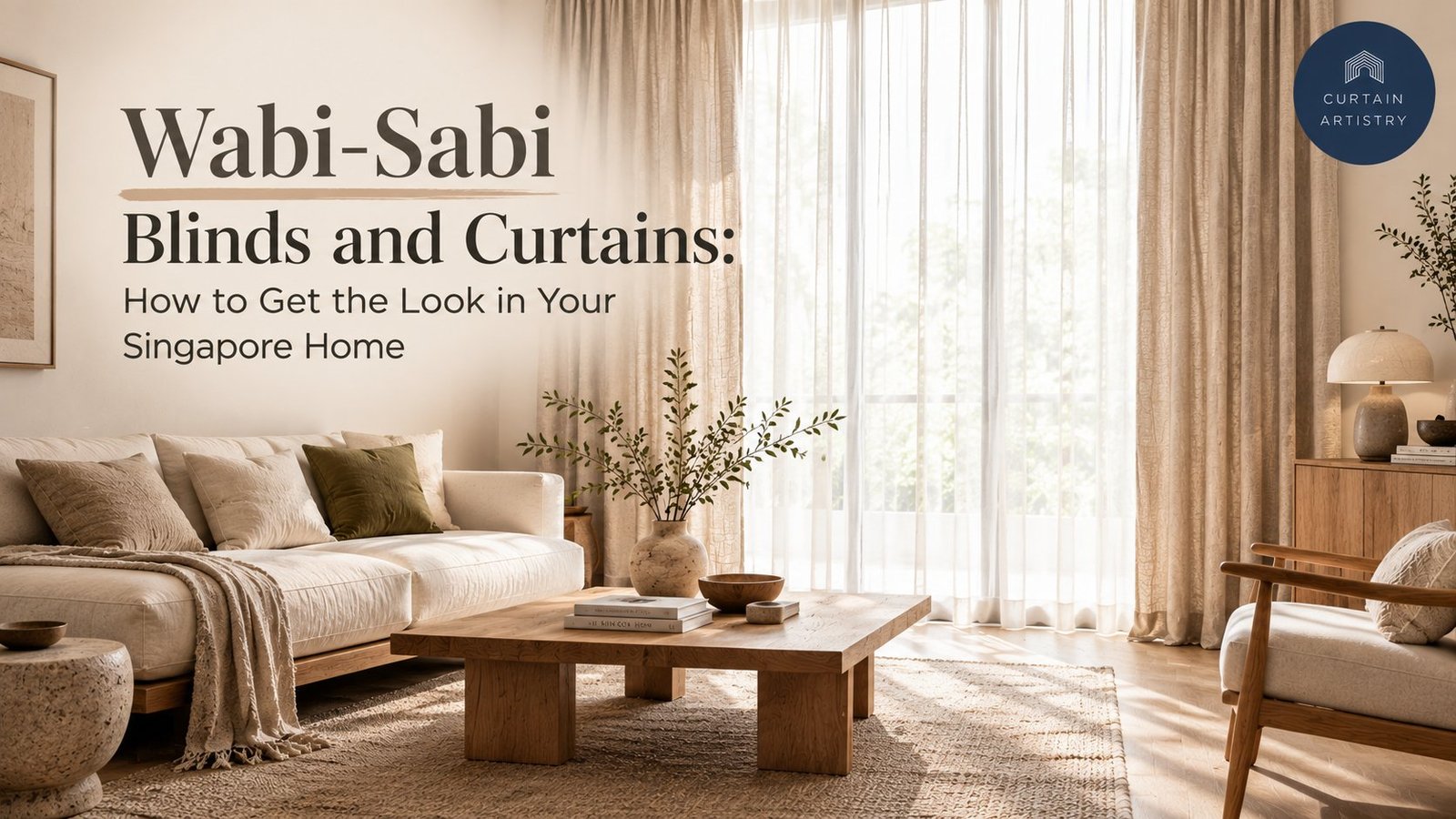
Scroll through social media and you will see the same calm, earthy, quietly beautiful interiors appearing again and again. Soft linen curtains, warm neutral walls, natural timber, handmade ceramics and a sense of unhurried calm. That look has a name: wabi-sabi. Among young Singapore homeowners, especially new BTO and condo owners, wabi-sabi has become one of the most popular design directions. This guide explains what it really means, how to bring wabi-sabi blinds and curtains into your home, and how to keep the style practical in our tropical climate.
What Is Wabi-Sabi?
Wabi-sabi is a Japanese philosophy that finds beauty in simplicity, imperfection and the natural passage of time. In interiors, it means:
- Natural materials such as linen, cotton, timber, bamboo, stone and clay
- Muted, earthy colours drawn from nature
- Texture over pattern, with surfaces that look touched and lived in
- Handmade or slightly imperfect details rather than flawless, glossy finishes
- Less clutter, with room to breathe
It is not about being messy or old. It is about calm, honest and comfortable spaces.
Why It Suits Singapore Homes
Wabi-sabi is a natural fit for Singapore for several reasons:
- Small and medium homes benefit from calm, uncluttered looks.
- Warm neutrals and soft light make compact spaces feel bigger and more relaxed.
- Natural textures bring a feeling of nature into high-rise living.
- It pairs well with popular Japandi, Muji-style and Scandinavian directions that are already common in local homes.
The Wabi-Sabi Colour Palette
Think of colours found in earth, sand, stone and plants.
- Warm whites and off-whites, such as oat, cream and chalk
- Sand, beige and greige
- Soft taupe and mushroom
- Clay, terracotta and muted rust
- Olive, sage and moss green
- Charcoal and warm grey for subtle contrast
Avoid strong primary colours, glossy finishes and very high-contrast patterns.
Curtains for a Wabi-Sabi Home
Wabi-sabi blinds and curtains are often the easiest and most effective way to set the mood.
Fabric choices:
- Linen and linen-look fabrics. Their natural slubs, soft creases and relaxed drape are the heart of the style.
- Cotton blends. Soft, breathable and easy to live with.
- Textured weaves. Slightly uneven yarns give depth without needing pattern.
- Semi-sheer fabrics. Filter light gently and add an airy quality.
Styling tips:
- Use soft, floor-length curtains in warm neutral tones.
- Choose a relaxed drape, such as ripple fold, which keeps folds even without looking stiff. Read more about premium curtains in Singapore.
- Layer a sheer curtain with a heavier curtain in a similar colour for a tone-on-tone look. See our sheer and light-filtering drapes.
- Keep tracks simple and discreet, so the fabric becomes the feature.
Blinds for a Wabi-Sabi Home
Blinds can give you the same natural mood in a more compact form. Best choices:
- Timber Venetian blinds. Natural wood grain and warm tones bring a Japandi feel. Explore timber and aluminium Venetian blinds.
- Roman shades. Soft folds in natural fabric give a gentle, relaxed look. See Roman shades.
- Sheer shades. Filter daylight into a soft glow. See soft sheer shades.
- Roller shades in textured fabric. Choose linen-look or woven finishes in neutral tones. See classic roller shades.
- Korean combi blinds in neutral tones. Their soft layered look works well in muted palettes. See Korean combi blinds.
Light: The Most Important Ingredient
Wabi-sabi is about mood, and mood comes from light. Soft, diffused daylight is the signature of the style.
- Choose light-filtering fabrics that glow rather than block.
- Layer sheers during the day for a gentle haze.
- Use heavier layers or blackout lining at night for privacy and calm.
- Avoid harsh, direct glare, which flattens textures.
Putting It Together: A Sample Look
Living room:
- Warm white walls and oak flooring
- Ripple fold linen-look curtains in oat or sand, floor length
- A sheer inner layer to soften daytime light
- Natural wood furniture and a few handmade pieces
Bedroom:
- Soft taupe blackout curtains with a textured finish
- A calm, uncluttered layout
- Linen bedding in similar tones
Study or dining area:
- Timber Venetian blinds or a neutral Roman shade
- A wooden table and simple decor
Practical Tips for Singapore Conditions
Wabi-sabi is a natural, relaxed style, but our climate calls for a few smart choices.
- Humidity. Natural fibres can wrinkle or hold moisture. Keep rooms ventilated, and choose blends that resist creasing and are easy to care for.
- Heat and sun. Add a blackout lining or a roller shade behind linen-look curtains in west-facing rooms.
- Sun fading. Natural dyes and soft colours can fade. UV film can help protect fabrics and furniture.
- Maintenance. Choose washable or low-maintenance fabrics if you have children or pets.
- Real timber vs alternatives. Real timber blinds are beautiful but may not suit very humid or wet areas, so consider alternatives for kitchens and bathrooms.
Common Mistakes to Avoid
- Going too plain and cold. Wabi-sabi needs warmth and texture, not just white and grey.
- Over-styling. The look is relaxed. If it feels too perfect, it loses the point.
- Ignoring function. Pretty fabric still needs to block heat or provide privacy when needed.
- Mixing too many styles. Keep the palette and materials consistent.
- Choosing stiff, shiny fabric. It feels wrong for this style.
Budget-Friendly Ways to Get the Look
- Start with the living room curtains, because they have the biggest visual impact.
- Choose neutral colours that will last through changing trends.
- Mix a few natural textures rather than replacing everything.
- Consider a BTO or group buy package for better value on multiple windows. See our BTO and group buy packages.
Final Thoughts
Wabi-sabi is not a passing trend. It is a way of designing a calmer, more honest home, and wabi-sabi blinds and curtains are one of the best places to start. Soft fabrics, gentle light and natural tones can make even a compact flat feel like a peaceful retreat.
Create Your Calm Space
Curtain Artistry’s stylists can help you match fabrics, colours and systems to your home. Book your free consultation or call +65 9680 9422. You can also browse our design gallery for inspiration.
Visit us at 848 Sims Ave #01-720, Singapore 400848. Open Monday to Sunday, 10:00 AM to 7:00 PM.