
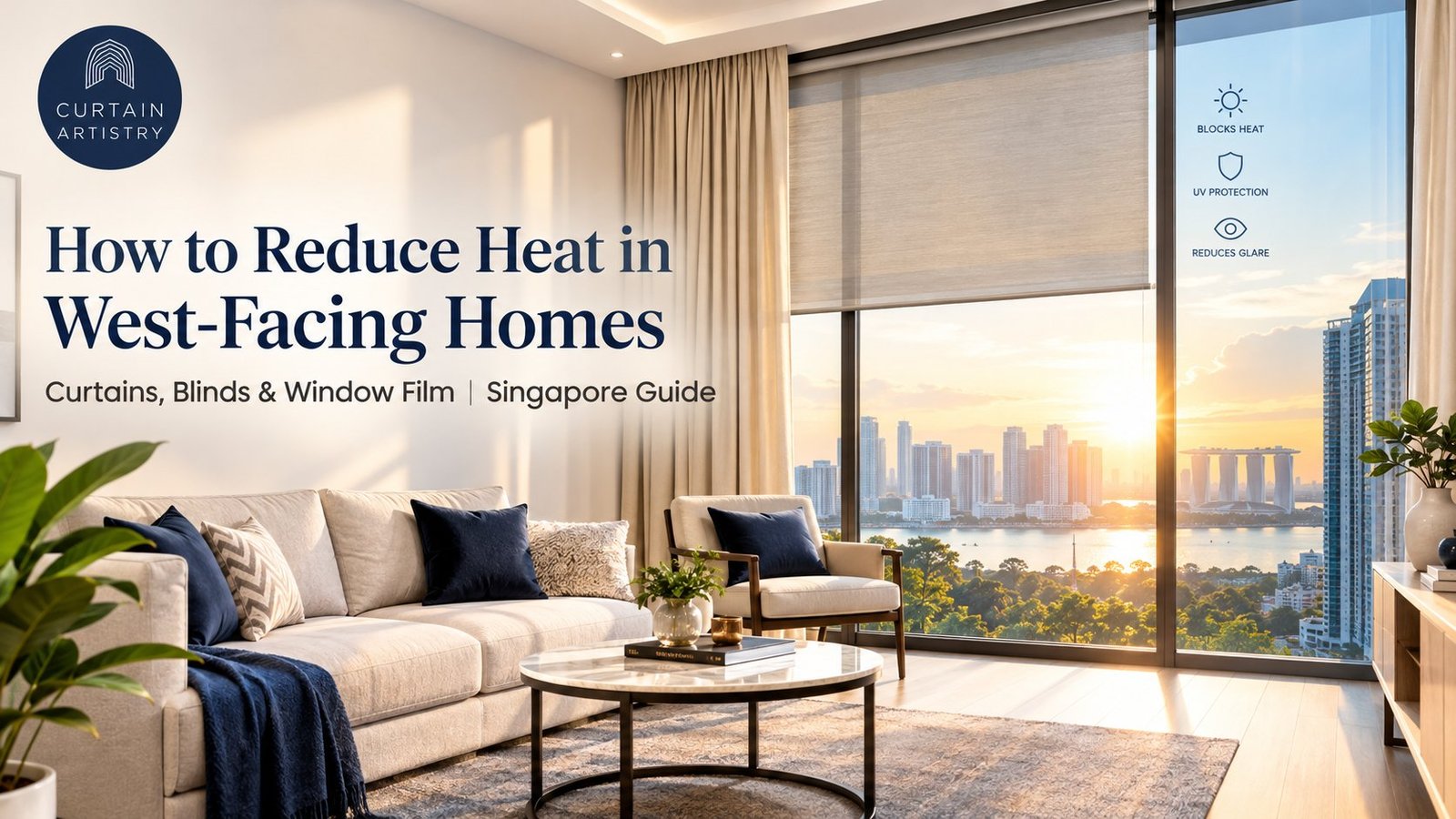
By Curtain Artistry | Custom Curtains and Blinds Singapore
If you live in one of Singapore’s west-facing homes, you probably know the feeling. By mid-afternoon the sun swings around, pours straight into the living room or bedroom and turns the space into a sauna. The air-conditioner works harder, the floor feels warm, the sofa fades and it becomes uncomfortable to relax or work from home.
You do not need to give up on your west-facing home. With the right combination of curtains, blinds and window film, you can cut glare, reduce heat and make the space far more comfortable. This guide explains how, and how to combine the different solutions for the best results. These tips are written for west-facing homes in Singapore.
Why West-Facing Windows Get So Hot
In the late afternoon the sun sits low in the sky and shines directly through west-facing windows. Low-angle sunlight enters deeper into the room and hits furniture, walls and floors for longer. Glass lets sunlight in easily and then traps much of the resulting heat inside, similar to a greenhouse. This effect is strongest in west-facing homes, where the afternoon sun hits the glass directly. The effects include:
- Higher room temperature in the afternoon and early evening
- Greater air-conditioning use, which can raise electricity bills
- Glare on TV screens and laptops
- Fading of fabrics, wood flooring, artwork and furniture
- Discomfort for people and pets
The Three-Layer Approach
For west-facing homes, the most effective strategy usually combines three layers, each doing a different job.
- Window film (outermost layer, on the glass) to block UV and cut heat and glare.
- Blinds or shades (middle layer) for adjustable light and heat control.
- Curtains (inner layer) for insulation, privacy and style.
You do not always need all three. Start with the layer that suits your budget and the severity of your problem, then add more if needed.
Layer 1: UV Protection Solar Window Film
For this layer, consider UV protection solar films.
Window film is applied directly to the glass. It works without changing how your windows look from inside, and it keeps working all day without you doing anything. Good solar films can:
- Reduce the amount of UV light entering the room
- Cut glare so you can still see the view and use screens comfortably
- Help reduce heat from direct sun
- Slow the fading of furniture and flooring
- Add a degree of privacy, depending on the type
Things to consider
- Films vary in tint, reflectivity and performance, so ask for guidance based on your orientation and needs.
- Some films slightly darken the room. Choose one that balances heat reduction with natural brightness.
- Check any condominium or management guidelines on external appearance before applying film.
- Film is a long-term solution, so quality and professional installation matter.
Layer 2: Blinds and Shades for West-Facing Homes
For west-facing homes, blinds let you adjust how much light and heat comes in, which is helpful because the sun’s strength changes throughout the day.
Good options for west-facing windows
- classic roller shades. Choose solar or sunscreen fabric that cuts glare while keeping some view, or a blackout fabric for maximum heat blocking.
- Korean combi blinds. The alternating sheer and solid bands let you set the exact level of light and privacy.
- Venetian blinds. Tilting slats lets you direct light upward to the ceiling and away from the floor. Timber and aluminium options are available.
- premium outdoor zip blinds. For balconies, outdoor blinds can stop sunlight before it reaches the glass, which is often more effective than blocking it inside.
Colour matters
- Light-coloured or reflective outer surfaces bounce more sunlight away.
- Dark colours absorb more heat, although darker fabric can reduce glare more effectively.
- Many blackout fabrics have a white or reflective backing facing the window for this reason.
Layer 3: Curtains
Curtains add a layer of insulation between the window and your room.
- blackout curtains block the most sunlight and heat.
- Thick, lined curtains add insulation and reduce the heat transferred into the room.
- Layered curtains (sheer and light-filtering drapes plus a heavier curtain) let you filter light during the day and shut out the sun when it is strongest.
Make them work harder
- Mount the track high and wide so the curtains cover the entire window and frame.
- Choose floor-length curtains for fuller coverage.
- Close the curtains before the sun hits the window, not after the room has heated up.
Which Solution for Which Room?
| Room | Suggested combination |
|---|---|
| West-facing living room | UV film + sheer curtains + heavier curtain or roller shade |
| West-facing bedroom | Blackout curtains + optional UV film |
| Home office or study | Sunscreen roller shade or Korean combi blinds + UV film |
| West-facing balcony | Outdoor zip blinds |
| Kitchen with west window | Aluminium Venetian blinds or roller shades |
How Much Can You Expect to Improve?
For west-facing homes, results depend on your unit’s size, window area, floor level, the type of glazing, the solutions you choose and how you use them. Window treatments can noticeably improve comfort and reduce glare, but they are not a replacement for air-conditioning in Singapore’s climate. Think of them as helping your air-conditioner work less hard and keeping your home more pleasant between cooling cycles.
Everyday Habits That Help
- Close curtains or lower blinds early in the afternoon, before the sun is strongest.
- Keep one layer, such as a sheer, closed to filter light while keeping the room bright.
- Rearrange furniture so that valuable items are not directly in the sun’s path.
- Use ceiling fans or air circulation to move cooler air around.
- Open windows in the evening when it cools down, if safe and practical.
Common Mistakes to Avoid
- Relying only on thin sheer curtains. They soften light but do not block much heat.
- Leaving gaps at the top and sides. Heat and light enter wherever the coverage ends.
- Choosing very dark film in a small, dim room. The room may feel gloomy.
- Ignoring the balcony. Outdoor blinds can be one of the most effective solutions.
- Forgetting the glass door. Large sliding doors let in a lot of heat.
Protecting Your Furniture and Flooring
Sunlight, especially UV, fades fabrics, wood and artwork over time. A combination of UV film and curtains or blinds helps protect your investment. This is particularly useful for timber floors, leather sofas and photographs.
Final Thoughts
A west-facing home does not have to feel like an oven. By layering solar film, blinds and curtains in a way that suits your room, you can enjoy a cooler, calmer, more comfortable home while protecting your furniture. The right combination depends on your layout, budget and lifestyle, so it is worth getting expert advice. For west-facing homes, the right layered combination makes the biggest difference.
Cool Down Your Home
Curtain Artistry offers a free consultation and price estimate for HDB flats, condominiums and landed homes. Book your free consultation or call +65 9680 9422. Visit us at 848 Sims Ave #01-720, Singapore 400848. Open Monday to Sunday, 10:00 AM to 7:00 PM.