

If you have ever wanted a wall or window that can go from fully see-through to completely private at the flip of a switch, smart glass Singapore homeowners are installing does exactly that, without a single curtain or blind in sight. It is one of the more unusual window and partition upgrades available here, and it suits everything from a home office divider to a bathroom wall, though balcony use comes with a few rules worth understanding before you commit.
This guide covers what smart glass actually is, how the technology works, where it fits well in a Singapore home, and an important regulatory point to check first if you are considering it for a balcony.
1. What Is Smart Glass
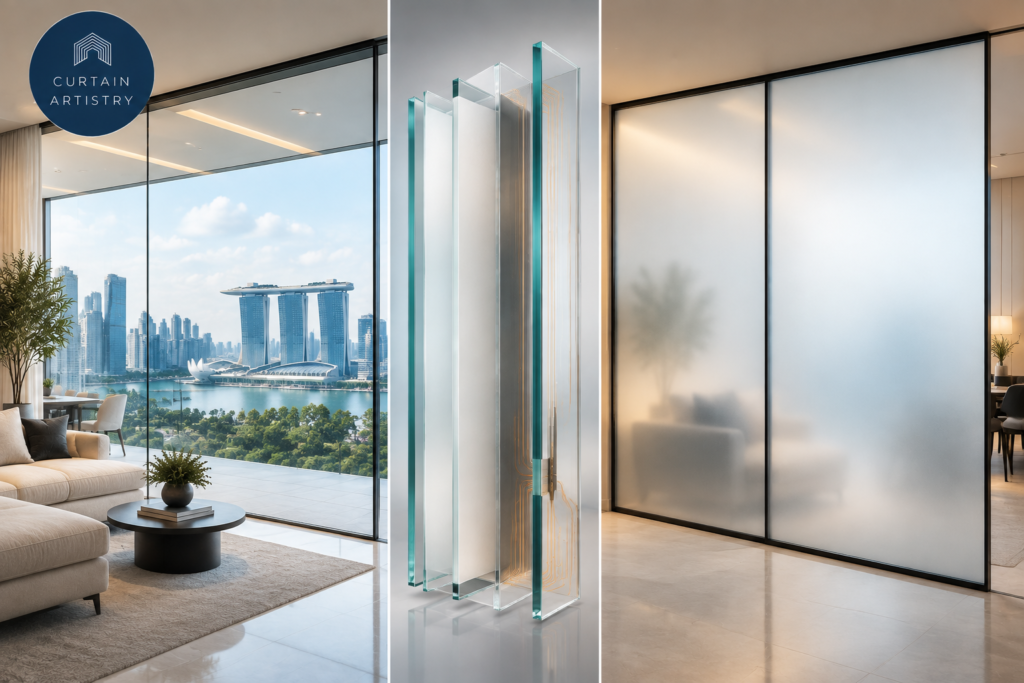
Smart glass, also called switchable glass, is glass fitted with a thin film that changes from opaque to transparent when an electric current is applied. Most residential smart glass in Singapore uses PDLC technology, short for Polymer Dispersed Liquid Crystal. The film sits laminated between two panes of glass, or as an adhesive film applied to existing glass, and is connected to a small control unit, typically operated with a remote, wall switch, or app.
Unlike tinted or frosted glass, which stays fixed, smart glass switches states in seconds. Left off, it appears milky white and blocks the view through. Switched on, it clears almost instantly, giving you a plain transparent pane.
2. How Smart Glass Works
The technology behind smart glass Singapore installers use is built around microscopic liquid crystal droplets suspended inside a polymer layer. When the film has no electrical current running through it, those droplets sit in random directions, scattering light and making the glass appear opaque. Once a low voltage is applied, the droplets align in a uniform direction, letting light pass straight through and making the glass clear.
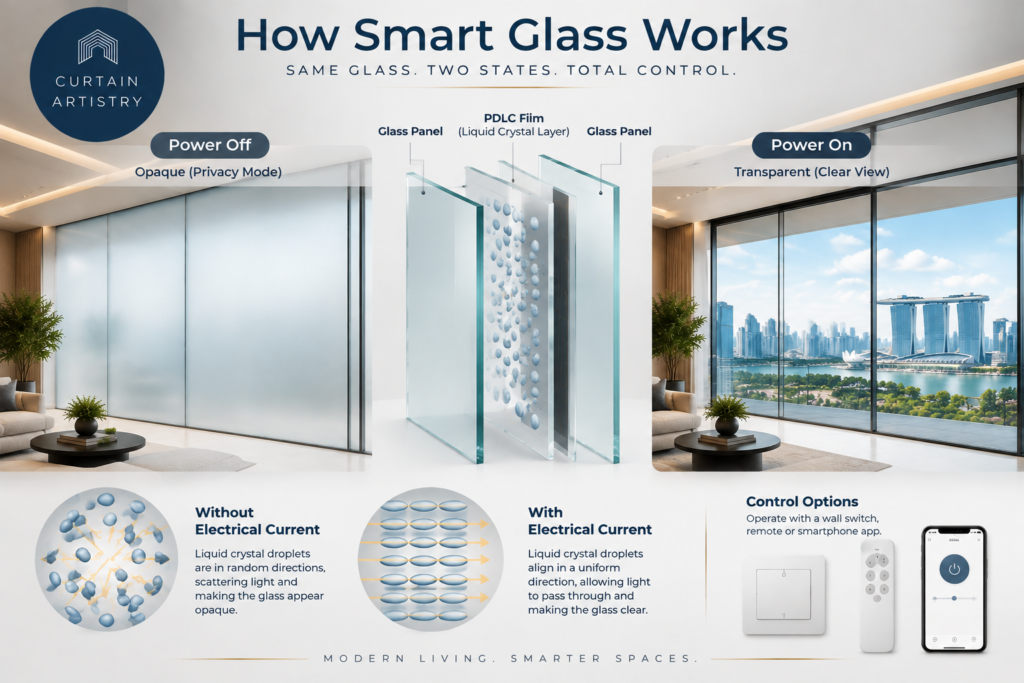
This switch happens quickly, generally within a second or two, which is part of why smart glass feels closer to a light switch than a curtain. Control setups vary from a simple wall switch to a smartphone app, and some larger installations can be zoned, so different panels switch independently rather than the whole glass wall changing at once.
3. Smart Glass for Balcony Enclosures, What to Check First
This is the part worth reading carefully before you commit to a balcony installation. Under URA guidelines, balconies in Singapore are treated as semi-outdoor spaces and are generally exempt from Gross Floor Area calculations specifically because they stay open and naturally ventilated. Converting a balcony into a fully enclosed indoor space using a solid, non-porous barrier, which can include fixed glass panels, may turn it into unauthorised additional floor area, and URA guidance specifically flags fully sealed “smart windows” as something to be cautious about for this reason.
What URA does generally allow are fully retractable screens that preserve natural ventilation when open. In practice, this means a balcony application of smart glass is more likely to be approved if it is installed as part of a retractable or sliding system rather than a permanent, fixed seal, and you will usually also need your Management Corporation Strata Title’s approval for the design, frame colour, and materials before installation begins.
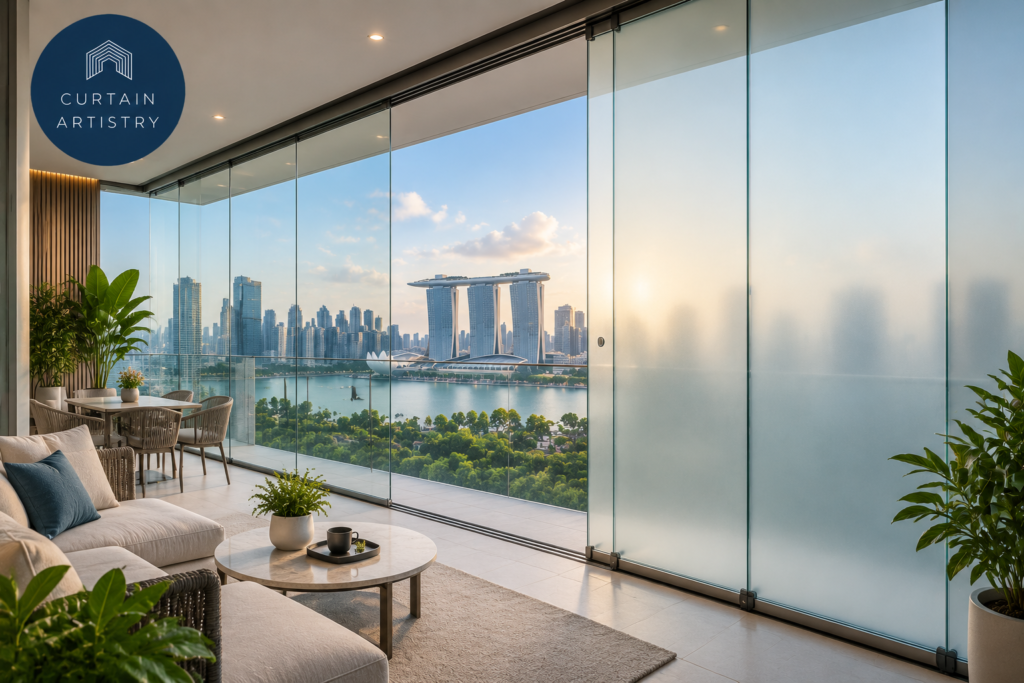
None of this rules out smart glass for a balcony, but it does mean the installation approach matters. Before ordering, it is worth checking with your MCST for any building-specific rules, and confirming with your installer whether the proposed setup meets URA’s retractable and ventilation requirements for balcony use. This guide is general information, not legal advice, so a direct check with your MCST or URA is the safest way to confirm what is allowed for your specific building.
4. Benefits of Smart Glass for Singapore Homes
Smart glass Singapore homeowners install brings a handful of practical advantages beyond the novelty factor.
Instant privacy control. Switch a room from open to private in seconds, without drawing a curtain or lowering a blind.
A cleaner, more modern look. No visible fabric, cords, or tracks, which suits minimalist and contemporary interiors.
Natural light stays consistent. Even in the opaque state, smart glass still lets diffused light through, unlike a solid wall or fully closed blind.
Space-saving. Since there is no fabric to gather or blind to stack, smart glass is a practical option for tight spaces where a curtain track or blind box would eat into the room.
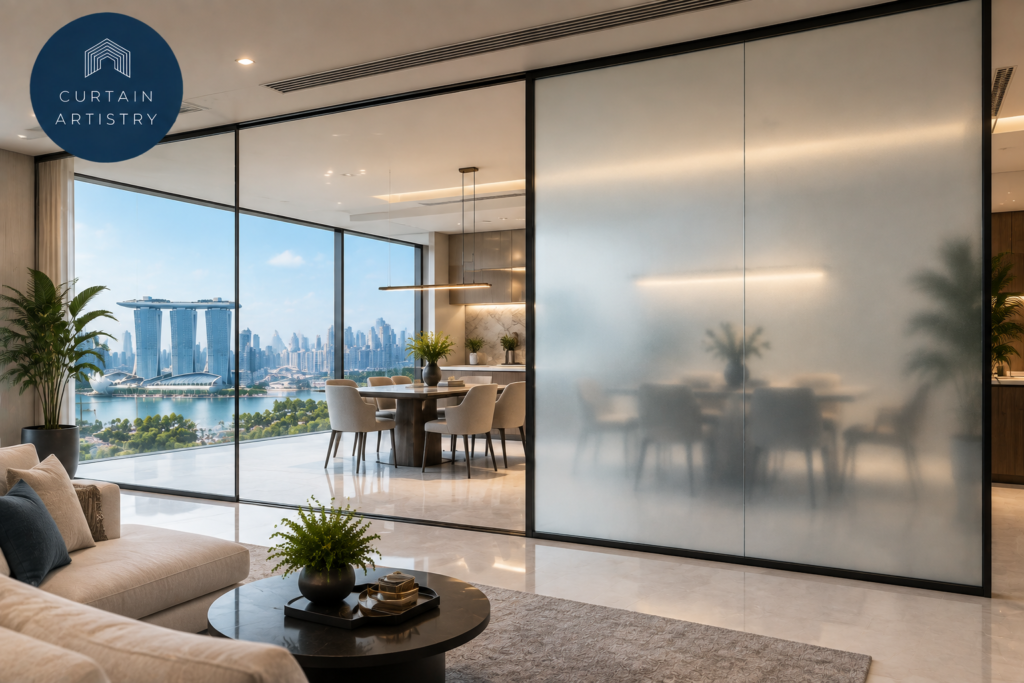
Multi-use flexibility. The same panel can double as a room divider, a shower or bathroom wall, or a meeting room partition, switching between open-plan and private as needed.
5. Smart Glass vs Traditional Curtains and Blinds
| Factor | Smart Glass | Curtains and Blinds |
|---|---|---|
| Privacy control | Instant, electric switch | Manual or motorised draw |
| Look | Sleek, minimal, no visible fabric | Wide range of textures and styles |
| Light in private mode | Diffused light still passes through | Depends on fabric, blackout blocks fully |
| Best for | Partitions, bathrooms, feature walls | Bedrooms, living rooms, most standard windows |
| Installation | Requires glass and electrical wiring | Track or rod mounted, generally simpler |
| Upfront cost | Higher | Lower to moderate |
For homeowners who prefer adjustable window coverings, explore our range of Blinds Singapore solutions designed for modern interiors.
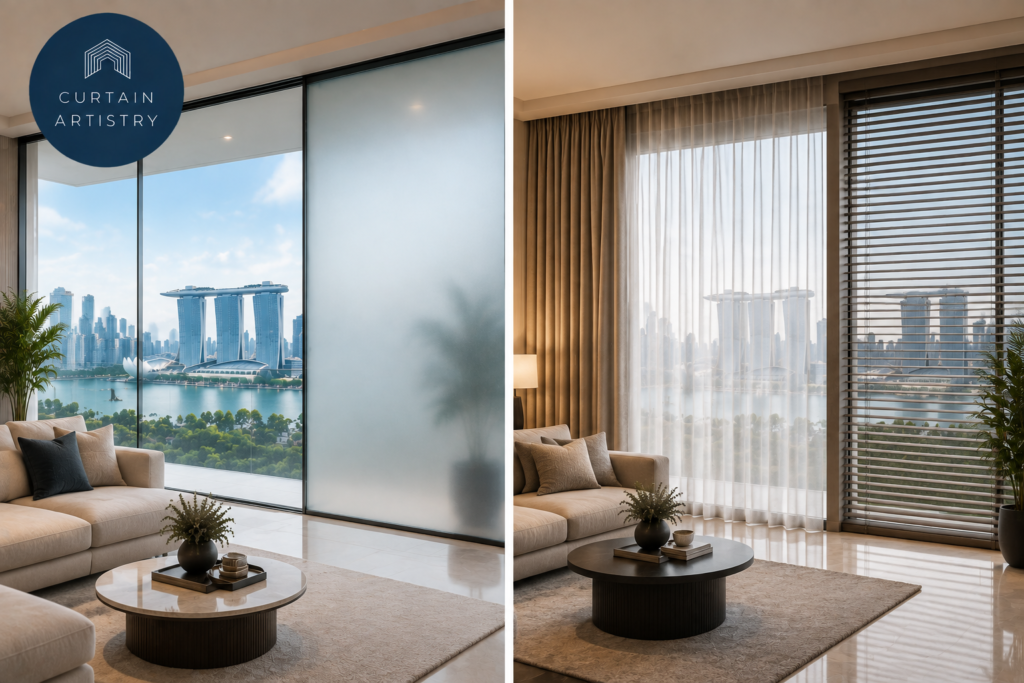
If you want a design feature that doubles as a functional partition, smart glass offers something curtains and blinds cannot replicate. For straightforward bedroom or living room light control, however, curtains or blinds remain the more practical and budget-friendly choice.
6. Best Applications for Smart Glass
Smart glass Singapore installers most often work with a handful of spaces where the switch-on-demand privacy genuinely earns its cost.
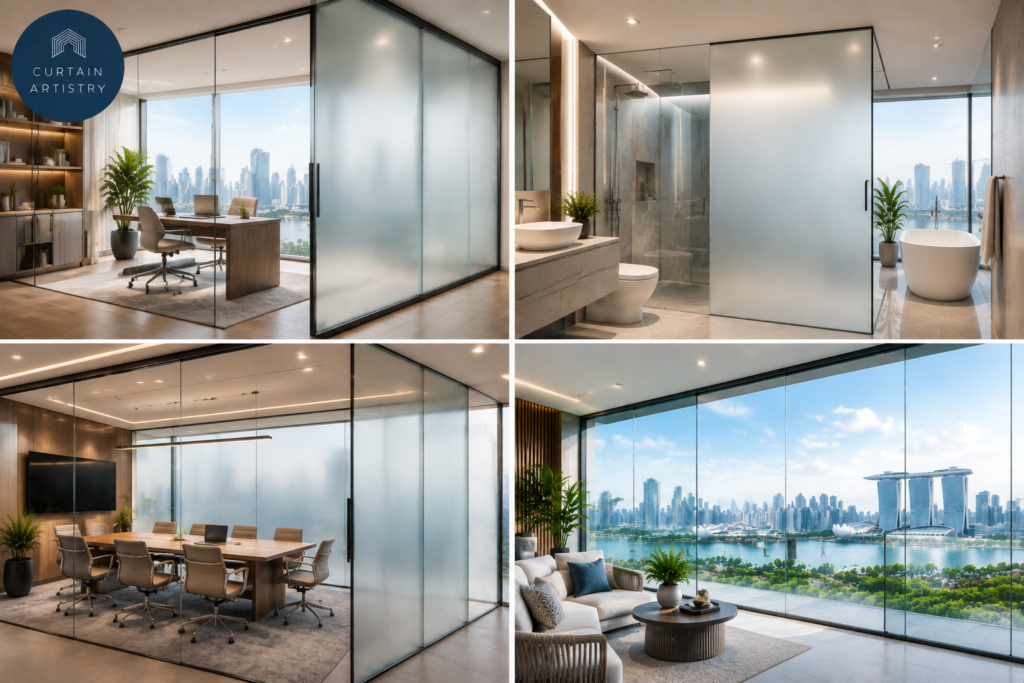
Home offices and study rooms benefit from smart glass used as a room divider, letting you keep the space open and bright most of the time, then switch to private for calls or focused work.
Bathrooms and ensuites are a popular application, particularly where a glass wall lets natural light into a windowless bathroom while still offering full privacy when switched off.
Feature walls and meeting rooms in a home office or small business setting can use smart glass as a design statement that also serves a genuine functional purpose.
Balconies, as covered above, can work well with smart glass when installed as part of a retractable, URA-compliant system, and are worth discussing directly with your installer and MCST before finalising the design.
7. Cost Factors in Singapore
Smart glass Singapore pricing depends on a few main factors:
- Panel size. Larger glass panels need more film and a stronger control unit, which increases the price.
- Zoning and control complexity. A single switch for one panel costs less than a multi-zone setup with independent app control for several panels.
- Installation type. Retrofitting film onto existing glass is generally more affordable than installing new laminated smart glass panels from scratch.
- Frame and glazing requirements. Balcony installations that need to meet retractable or ventilated design requirements may involve additional framing work compared to a straightforward indoor partition.
Because glass sizes, control setups, and any regulatory requirements vary so much between projects, the most accurate quote comes from an on-site assessment rather than a general estimate.
8. Choosing the Right Installer
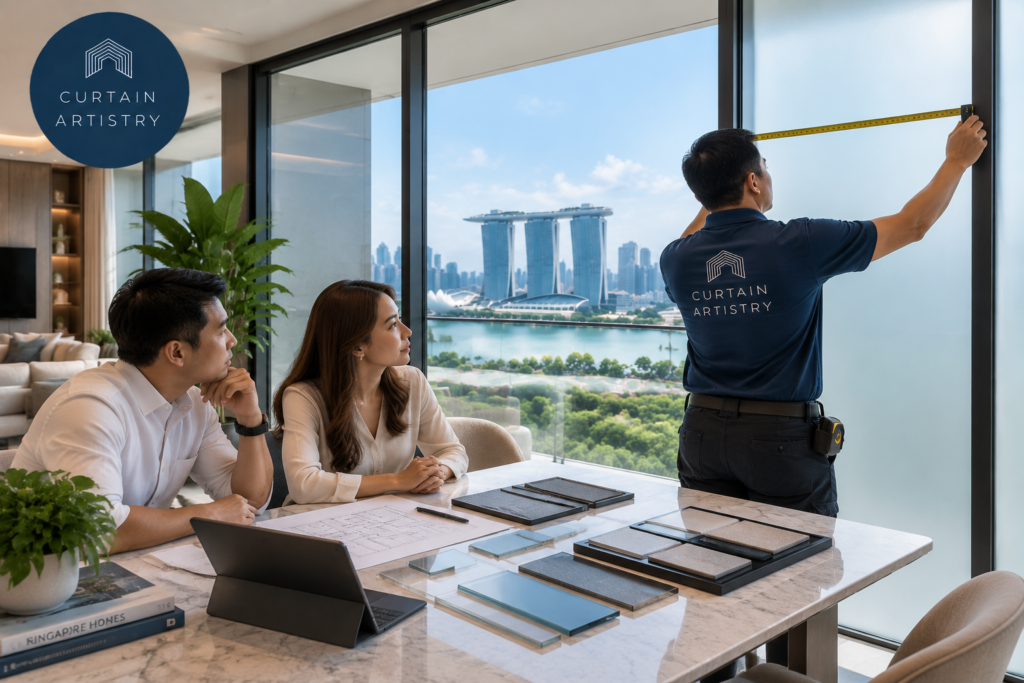
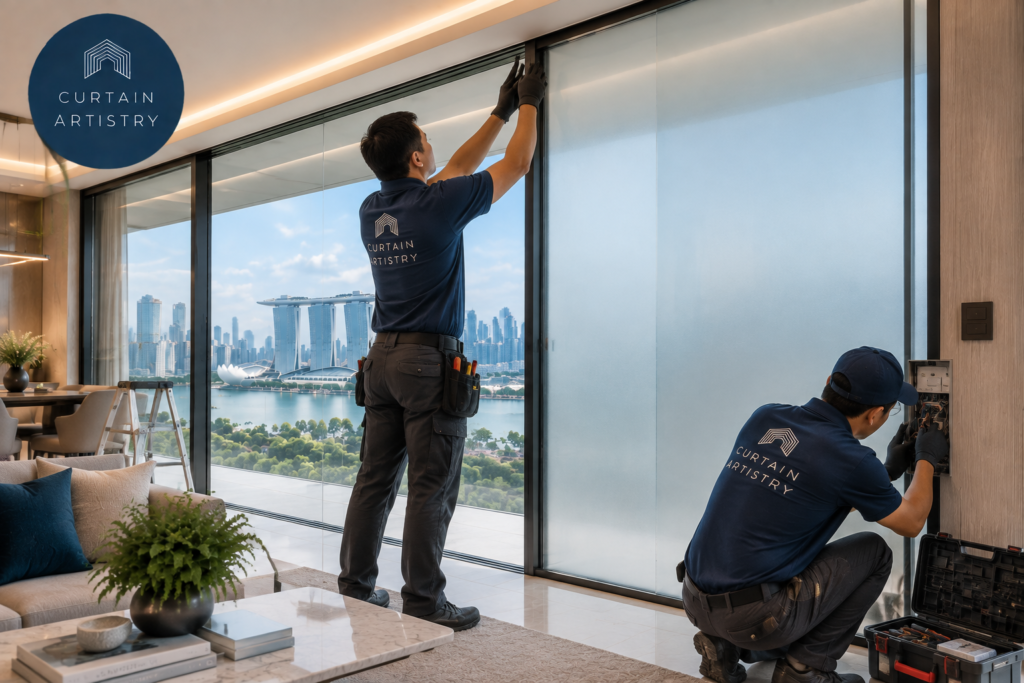
At Curtain Artistry, we assess the intended use, whether that is an indoor partition, a bathroom wall, or a balcony enclosure, before recommending a smart glass setup, and we factor in MCST and URA considerations for any balcony application rather than treating every installation the same way. Our team handles measurement, film or panel selection, wiring, and professional installation from start to finish.
Before choosing an installer, it is worth asking how they handle warranty on the switching film and control unit, whether they can advise on MCST or URA requirements for balcony work, and how they support repairs if a panel or control unit needs servicing later.
FAQ
Is smart glass allowed on balconies in Singapore? It depends on the installation. URA generally requires balcony screens to remain retractable and allow natural ventilation, so a fully sealed, permanent smart glass enclosure may not comply. Check with your MCST and installer before finalising a balcony design.
How long does smart glass take to switch between clear and opaque? Typically just a second or two, since the technology relies on an electric field aligning liquid crystals rather than any physical movement.
Can smart glass be added to existing glass, or do I need new panels? Both options exist. A switchable film can sometimes be applied to existing glass, while other installations use new laminated smart glass panels built with the film already inside.
Does smart glass block all light when switched off? No. In the opaque state, smart glass still allows diffused light through while blocking a direct view, unlike a blackout curtain or blind.
Is smart glass expensive to run day to day? The film only draws power while actively switching or holding the clear state, and residential setups generally use low voltage, so ongoing electricity use is minimal compared to the upfront installation cost.
Ready to Explore Smart Glass for Your Home?
Whether you are looking at a sleek room divider, a private bathroom wall, or a balcony upgrade done the compliant way, smart glass Singapore homeowners are exploring offers a genuinely different approach to light and privacy control. Get in touch with Curtain Artistry for a free consultation and quote, and let our team help you figure out the right setup, including what is needed if you are considering it for a balcony.
Are you thinking about smart glass for an indoor space, a balcony, or both? Let us know what you are planning.